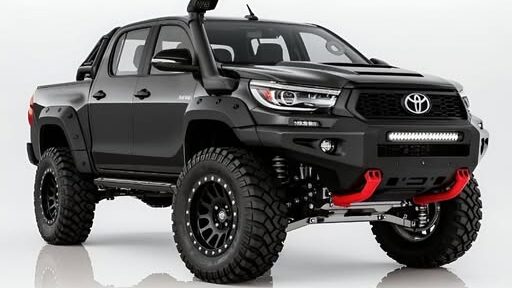
The 2026 Toyota Hilux continues Toyota’s long‑running legacy of rugged reliability, strong performance, and broad global appeal. With this ninth‑generation model, Toyota has expanded powertrain choices to include the familiar diesel engine with improved efficiency and a mild‑hybrid assist, as well as fully electric and future hydrogen options — giving buyers choice across a range of use cases from work utility to cleaner driving. (rotomacpens.com)
This in‑depth review focuses on power, torque, engine options, performance figures, and how the 2026 Hilux compares within the modern pickup landscape.
1. Engine Options & Power Outputs
The 2026 Hilux lineup offers multiple powertrains depending on market and trim — each engineered for its own balance of capability, efficiency, and rugged performance.
Primary Powertrains at Launch
| Powertrain | Power | Torque | Transmission | Drivetrain |
|---|---|---|---|---|
| 2.8L Turbo Diesel (Standard) | 150 kW (~201 hp) | 500 Nm (auto) / 420 Nm (manual) | 6‑spd Auto / 6‑spd Manual | 4×2 / 4×4 (rotomacpens.com) |
| 2.4L Diesel (Base Work/Global Markets) | ~110 kW (~148 hp) | ~400 Nm | 6‑spd Auto | 4×2 / 4×4 (Oto) |
| Electric BEV (EV) | ~144 kW (~193 hp) | ~473 Nm combined* | Dual electric motors | AWD (rotomacpens.com) |
*Combined torque in EV format estimated from dual motors (front + rear).
Toyota has also announced plans for a hydrogen fuel cell version arriving in some markets around 2028. (Autoweek)
Diesel Engines — Core Strength & Capability
2.8‑Litre Turbo Diesel (1GD‑FTV)
The headline powertrain for the 2026 Hilux is the well‑tested 2.8‑litre turbocharged four‑cylinder diesel, carried over with updates and an available 48‑volt mild‑hybrid assist system.
Key facts:
- Power: 150 kW (~201 hp) @ ~3000‑3400 rpm
- Torque: 500 Nm (with automatic), 420 Nm (with manual)
- Transmission: 6‑speed automatic or 6‑speed manual
- Drive: Available in both 4×2 and 4×4 configurations (rotomacpens.com)
The mild‑hybrid setup adds a small electric motor generator and a 48 V battery, which improves start‑stop behavior and slightly assists acceleration, but does not change peak power output from the engine. (@RACV)
This powertrain remains the backbone of the Hilux lineup, balancing torque for towing and payload with excellent real‑world durability — a reason Hilux remains popular globally. Fuel economy for this engine typically falls in the 7.2 – 7.6 L/100 km range. (rotomacpens.com)
Smaller Diesel & Alternative ICE Engines
Some regions still see a 2.4‑litre diesel option — especially in work‑focused variants:
- Power: ~110 kW (~148 hp)
- Torque: ~400 Nm
- Transmission: 6‑speed automatic or manual
- Used in base 4×2 and 4×4 models where simplicity and cost‑effectiveness are priorities. (Oto)
Though not as powerful as the 2.8, this engine still offers useful torque for light towing and daily work duties.
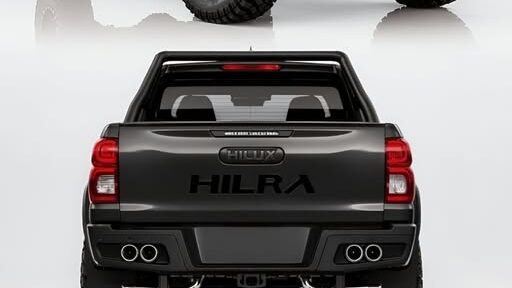
Electric Powertrain (BEV)
For the first time in its storied history, Hilux also arrives with a battery‑electric version (BEV) in select markets. It uses:
- Battery: ~59.2 kWh lithium‑ion
- Power: ~144 kW (~193 hp)
- Torque: Combined ~473 Nm (twin electric motors)
- Drivetrain: Permanent AWD (rotomacpens.com)
While the EV doesn’t match the diesel’s towing or payload figures (e.g., ~1,600 kg towing compared to ~3,500 kg for diesel), it gives a zero‑emission alternative for urban and fleet buyers where charging infrastructure is available. (Autoweek)
2. Performance and Capability
Power & Torque Chart — Core Engines
| Engine Variant | Power | Torque | Best Use Case |
|---|---|---|---|
| 2.8L Turbo Diesel (Auto) | 150 kW (~201 hp) | 500 Nm | Heavy towing, 4×4 off‑road |
| 2.8L Turbo Diesel (Manual) | 150 kW (~201 hp) | 420 Nm | Work loads + engaged driving |
| 2.4L Diesel | ~110 kW (~148 hp) | ~400 Nm | Light work, budget‑oriented |
| EV Dual Motors | ~144 kW (~193 hp) | ~473 Nm combined | Urban use, zero emissions |
This illustrates how the diesel version — particularly with its high torque at low rpm — remains best suited for heavy loads, trailer towing, and rugged terrain, while the BEV serves markets focused on clean driving and short‑range utility. (rotomacpens.com)
3. How the Powertrains Compare
Diesel vs. BEV — Strengths & Weaknesses
| Attribute | Diesel 2.8L | Electric BEV |
|---|---|---|
| Peak Power | ~201 hp | ~193 hp |
| Peak Torque | Up to 500 Nm | ~473 Nm combined |
| Towing Capability | ~3,500 kg | ~1,600 kg* |
| Payload | ~1,000 kg | ~715 kg* |
| Fuel / Energy | Diesel combustion | Electric battery |
| Optimal Usage | Long trips, heavy load | Short range, urban fleets |
| Emissions | Higher | Zero tailpipe |
* EV figures approximate and applicable to certain markets; payload/towing vary. (rotomacpens.com)
4. Transmission & Drivetrain Details
The 2026 Hilux’s power delivery also depends on transmission and drivetrain setup:
| Transmission | Effect on Power/Feel |
|---|---|
| 6‑Speed Automatic | Smooth shifts, best torque utilization |
| 6‑Speed Manual | Direct driver control, slightly lower torque at peak |
| Electric Motors (BEV) | Instant torque delivery, AWD traction |
The electric powertrain’s instant torque makes for responsive acceleration from standstill — even if peak horsepower is slightly lower than the diesel. Meanwhile, the diesel’s broad torque band makes it better suited for towing and hauling.
5. Fuel Economy & Efficiency
Even with strong performance, the 2.8L diesel delivers competitive efficiency:
| Variant | Fuel Economy Estimate |
|---|---|
| 2.8L Turbo Diesel Auto | ~7.5–8.1 L/100 km |
| 2.8L Turbo Diesel Manual | ~7.1–8.0 L/100 km |
| 2.4L Diesel | ~8.5–9.2 L/100 km |
| BEV Hilux | ~300+ km range WLTP* |
* EV range is WLTP estimate; real figures vary with load, terrain and climate. (rotomacpens.com)
The mild‑hybrid assist adds smoother starts and slightly improved economy under load, though peak power remains manufacturer‑rated at 150 kW. (@RACV)
6. Real‑World Capability (Towing & Payload)
A key reason Hilux remains popular is its workhorse capacity:
| Capability Metric | Value |
|---|---|
| Towing (Braked) | ~3,500 kg |
| Payload | ~1,000 kg |
| 4×4 Traction | Standard on higher trims |
| Fuel Tank | ~80 L |
The combination of high torque and rugged ladder‑frame chassis makes the diesel versions especially capable for heavy‑duty work. (rotomacpens.com)
7. What Makes the 2026 Hilux Powertrain Stand Out
Diesel Strength: The 2.8L turbo‑diesel is a proven Toyota workhorse with strong low‑end torque — ideal for towing, off‑road, and commercial applications. (rotomacpens.com)
Mild‑Hybrid Advantage: While not a full hybrid, the 48V system smooths driving feel and slightly improves fuel economy. (@RACV)
Electric Future: The BEV model represents Toyota’s first electrified Hilux and reflects the company’s multi‑path strategy toward cleaner mobility — perfect for city fleets and short‑range daily use. (Autoweek)
8. Conclusion — Power, Performance & Practicality
The 2026 Toyota Hilux stands at a crossroads of tradition and innovation. Its core 2.8‑litre diesel remains a torque‑rich, rugged workhorse, while the introduction of a beefed‑up mild‑hybrid system and a fully electric variant broadens its appeal to global markets with varying needsL article version for your blog!